Call (352) 605-0696

Blog

How Hurricanes and Storms Damage Your Roof

Call (352) 605-0696

Wind, rain, and flying debris attack your roof in ways that are not always visible from the ground. This guide explains exactly how hurricanes damage each type of roofing material, what hidden problems to look for, and what to do in the critical hours after a storm. Call (352) 605-0696 for a post-storm inspection.
How Wind Damages Your Roof During a Hurricane

Wind is the primary destructive force during a hurricane, and it attacks your roof in ways that are not always immediately visible. Understanding the mechanics helps you know what to look for after a storm passes.

Uplift Pressure

As wind flows over your roof, it creates negative pressure on the leeward side, similar to how an airplane wing generates lift. This uplift force pulls shingles, tiles, and panels away from the deck. The effect is strongest at roof edges, ridges, and corners. During a Category 2 hurricane with sustained winds of 96 to 110 mph, the uplift at a corner can exceed the holding power of improperly fastened shingles.

Progressive Failure

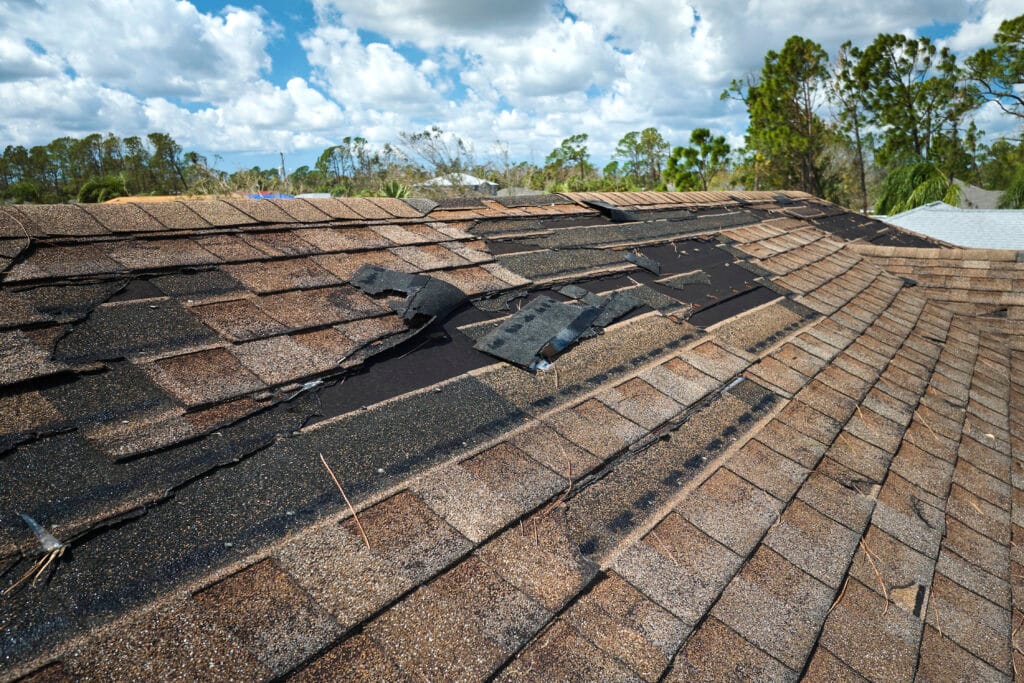
Wind damage rarely happens all at once. A single shingle tab lifts. With the underlayment now exposed, the next gust catches a larger surface area and peels back a wider section. Within minutes, an area that started as one loose tab becomes a 10-foot section of missing shingles. This progressive failure pattern is why post-storm inspections should cover the entire roof, not just the areas where damage is visible from the ground.

Pressure Cycling

Hurricane winds do not blow at a constant speed. They fluctuate rapidly, subjecting the roof to repeated cycles of positive and negative pressure. This cycling fatigues fastener connections, loosens nails that were tight before the storm, and breaks the adhesive bond between shingle layers. Your roof may survive the peak gust only to have weakened fasteners fail during the sustained winds that follow.

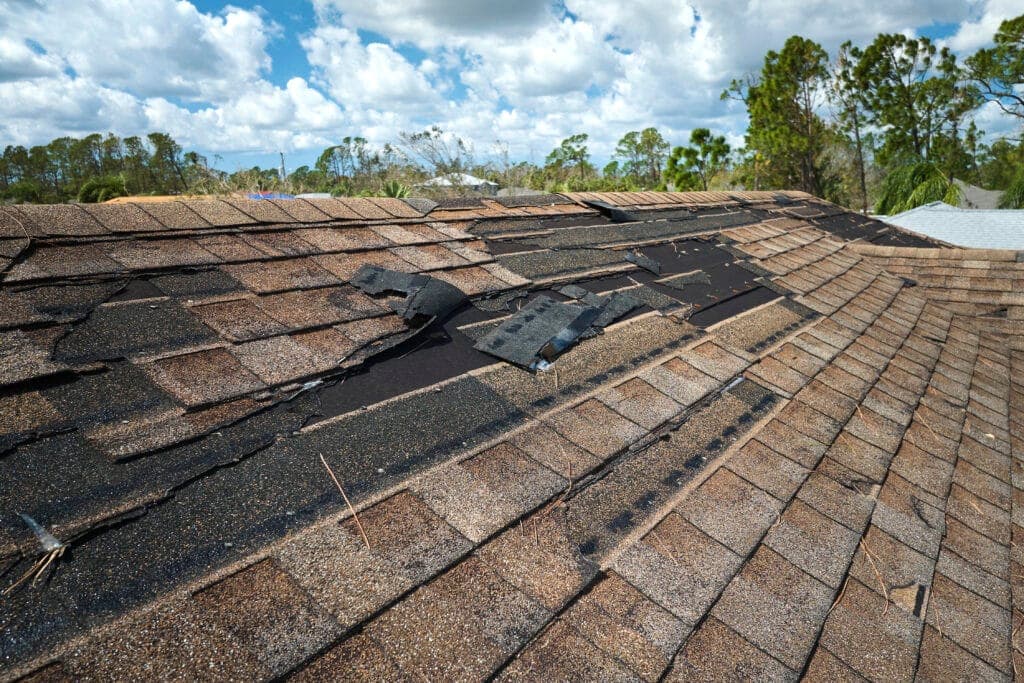
Shingle roofing — Damaged House Roof With Missing Shingles After Hur 2024 12 06 13 38 49 Utc by Protech Roofing

Rain Damage: What Happens When the Covering Fails

Wind gets the attention, but rain causes the real financial damage. A Category 1 hurricane can dump 6 to 12 inches of rain on Hernando County in a single event. If your roof covering has been compromised by wind, that water goes directly into your home.

Water follows gravity and the path of least resistance. It enters through a missing shingle, travels along roof trusses, and can emerge in a room 20 feet away from the entry point. This makes leak tracking after a storm particularly challenging because the ceiling stain rarely sits directly below the hole in the roof.

Wind-driven rain adds another dimension. At 80 mph, rain falls nearly horizontally and can force water upward beneath shingles, through flashing joints, and around penetrations that would be watertight in normal rainfall. Pipe boots, chimney flashing, and valley intersections are the most common wind-driven rain entry points.

The secondary water resistance layer beneath your shingles is your last defense. Homes with peel-and-stick underlayment can lose their entire roof covering and still keep the interior dry until repairs begin. Homes with traditional felt paper underlayment get far less protection because the felt paper tears in wind and deteriorates faster when exposed to direct rainfall.

Top View Of Leaking House Roof Covered With Protec 2024 12 07 02 05 04 Utc — roof leak repair by Protech Roofing

Debris Impact and What It Does to Different Materials

Florida hurricanes turn everyday objects into projectiles. Tree branches, fence boards, patio furniture, and loose building materials become airborne at wind speeds above 75 mph. The impact damage they cause depends on your roofing material.

Shingles

Asphalt shingles absorb impact poorly. A branch striking at speed tears through the shingle and into the underlayment or deck beneath. The damage is immediate and often results in a direct path for water entry. Even without penetration, heavy impacts crack the fiberglass mat inside the shingle, creating a weak point that fails within months.

Metal

Metal panels dent on impact but rarely puncture. A large dent is cosmetic damage, not structural damage. The waterproof integrity of the panel remains intact because the metal sheet has no seams in the impact area. This is one reason metal roofs have the lowest post-hurricane failure rate.

Tile

Individual tiles shatter when struck by heavy debris. The broken tile must be replaced, but the underlayment beneath typically prevents immediate water intrusion. However, multiple broken tiles across the roof create a vulnerability that must be addressed before the next rainfall. Matching replacement tiles in color and profile can be challenging for older tile installations.

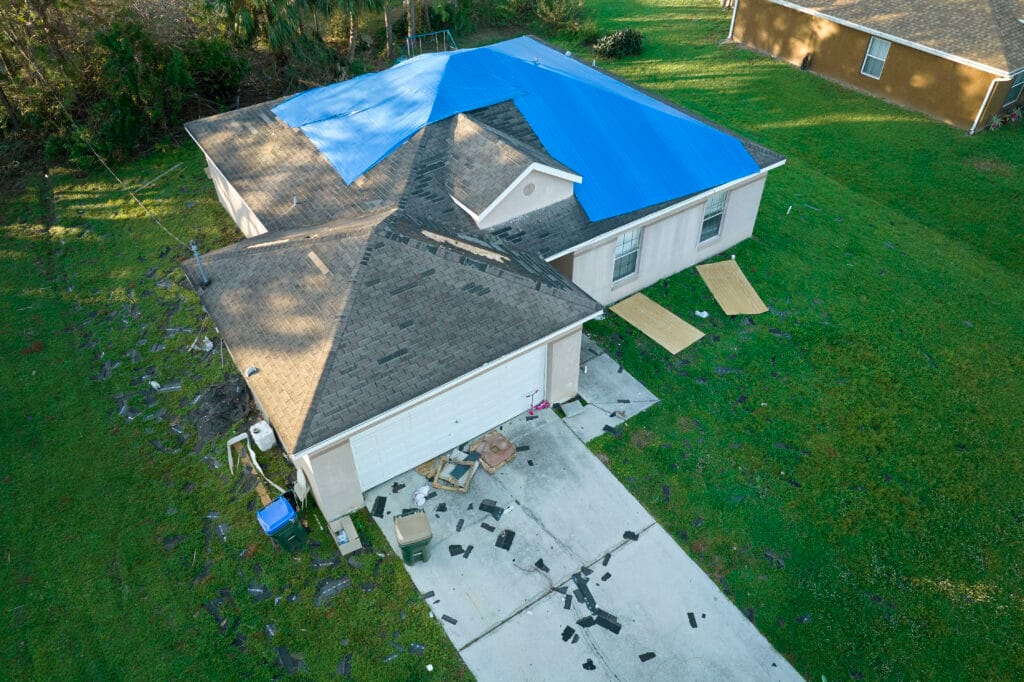
Emergency roof tarping and repair in Brooksville, FL by the Protech Roofing crew.

Hidden Storm Damage You Cannot See from the Ground

Some of the most expensive storm damage is invisible to a homeowner standing in the driveway. Professional inspectors know where to look because these hidden problems follow predictable patterns.

Loosened Fasteners

Hurricane-force winds stress every nail and screw holding your roof together. Nails that were tight before the storm may have backed out a fraction of an inch, enough to lose holding power during the next storm. A trained inspector checks fastener patterns and identifies pull-through where nail heads have pulled through the shingle material.

Compromised Adhesive Seals

Architectural shingles rely on a thermally-activated adhesive strip to bond each row to the one below it. Hurricane winds can break this bond without tearing the shingle. The shingle looks normal from the ground but is no longer sealed. The next moderate wind event will lift and potentially remove these unsealed shingles.

Damaged Flashing

Metal flashing around chimneys, walls, vents, and valleys can bend, separate, or lose its sealant during a storm. Damaged flashing does not leak immediately in light rain but will funnel water into the structure during the next heavy rainfall or wind-driven rain event.

Deck Moisture Intrusion

Even brief exposure of the deck to heavy rain during a storm can saturate the plywood. If the roof covering is repaired quickly, that trapped moisture promotes mold growth and wood rot that is not discovered until the next re-roof years later. Infrared scanning can detect trapped moisture without removing the roof covering.

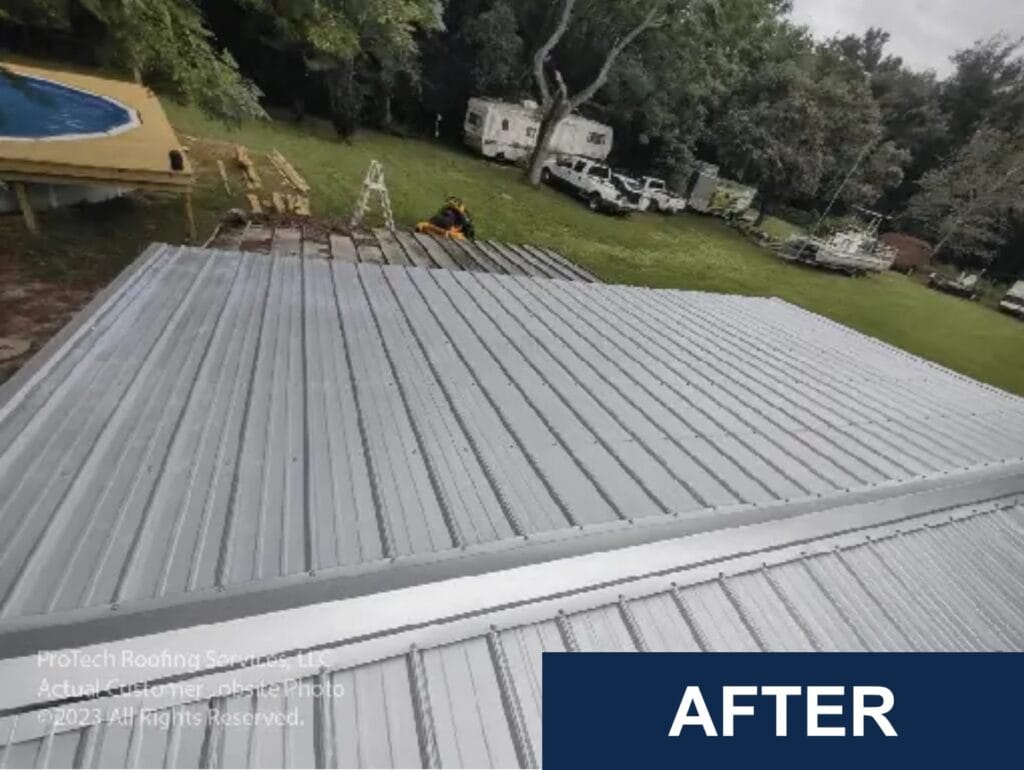
New high-performance metal roof replacement in Brooksville, FL by Protech Roofing.

What to Do After a Storm Hits Your Hernando County Home

The first 48 hours after a storm are critical. Here is the sequence that protects your home and your insurance claim.

1. Document Everything

Before touching anything, photograph all visible damage from multiple angles. Include wide shots showing the full roof and close-ups of specific damage. Document the date and time. This documentation is essential for your insurance claim.

2. Call for Emergency Tarping

If your roof has any openings, call for emergency tarping immediately. Every hour of exposure allows additional water damage to your interior. Protech provides same-day emergency response in Hernando County.

3. Contact Your Insurance Company

File your claim as soon as possible. Do not wait to get an estimate first. The insurance company will send an adjuster, but having your own documentation and a contractor estimate gives you leverage in the settlement negotiation.

4. Schedule a Professional Inspection

Have a licensed roofing contractor inspect the entire roof, not just the visibly damaged areas. Our insurance claims team provides detailed inspection reports with photo documentation that supports your claim for the full scope of damage, including the hidden problems that adjusters sometimes miss.

5. Do Not Sign Anything Under Pressure

Storm chasers arrive in Florida within days of every hurricane. They knock on doors, offer to “handle everything,” and push homeowners to sign contracts with assignment of benefits clauses that transfer your insurance claim to the contractor. Get multiple estimates, verify licensing, and take your time making a decision.

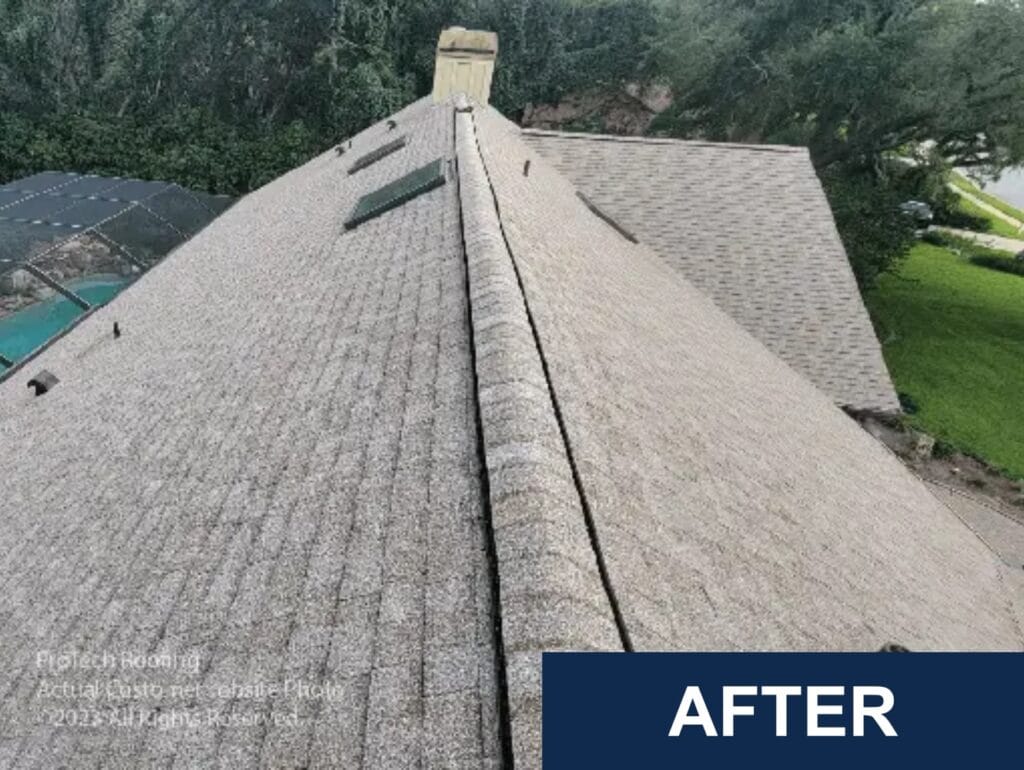
Beautiful new grey shingle roof replacement in Brooksville, FL by Protech Roofing.

Preparing Your Roof Before Hurricane Season

The best time to address roof vulnerabilities is before a storm is in the forecast. Here is what Hernando County homeowners should do each May before hurricane season begins.

  • Schedule a professional inspection. A roof inspection identifies loose shingles, damaged flashing, and deteriorating sealant that could fail under storm conditions.
  • Clean gutters and downspouts. Clogged gutters cause water to back up under the roof edge during heavy rain. Clear all debris and verify downspouts discharge away from the foundation.
  • Trim overhanging branches. Any branch that could reach your roof in a wind event should be trimmed back. Falling branches cause the majority of residential debris impact damage.
  • Secure loose items in the yard. Patio furniture, grills, planters, and decorative items become projectiles. Move them to a garage or shed before a storm approaches.
  • Check your insurance policy. Know your deductible, whether you have replacement cost or actual cash value coverage, and what your policy exclusions are. Discovering a coverage gap during a claim is too late.
  • Consider upgrading your roof. If your roof is within 3 years of its expected end-of-life, replacing it before hurricane season eliminates risk and qualifies you for insurance discounts immediately. The My Safe Florida Home program can reimburse up to $10,000 of that investment.

FAQ

Frequently Asked Questions

Should I inspect my roof after every storm?

+
You should inspect after any named storm (tropical storm or hurricane) that passes within 50 miles of your home. For regular thunderstorms, a visual check from the ground after unusually strong events is sufficient. Professional inspections should happen at least once per year before hurricane season.

How quickly should I tarp a damaged roof?

+
Immediately. Every hour of exposure allows additional water damage. Protech provides same-day emergency tarping in Hernando County. Document the damage with photos before tarping if it is safe to do so, as this documentation supports your insurance claim.

Will my insurance cover hurricane roof damage?

+
If your policy includes windstorm coverage, yes. However, most Florida policies have a separate hurricane deductible that is typically 2% of your home’s insured value. A $300,000 home would have a $6,000 hurricane deductible. Damage must exceed your deductible for insurance to pay. Our claims team helps maximize your settlement.

Can storm damage be invisible?

+
Yes. Loosened fasteners, broken adhesive seals, bent flashing, and deck moisture are all invisible from the ground. A professional inspector walks the roof and checks these specific failure points. We recommend professional inspection after every named storm, even without visible damage.

How do I protect my roof before a hurricane?

+
Schedule a professional inspection to identify vulnerabilities. Clean gutters. Trim overhanging branches. If your roof is near end-of-life, replace it before the storm. Upgrading to metal roofing or adding secondary water resistance provides the strongest protection and qualifies for insurance discounts.

What is secondary water resistance and why does it matter?

+
Secondary water resistance (SWR) is a peel-and-stick underlayment applied directly to the roof deck. If your roof covering blows off during a hurricane, SWR keeps water out of your home. Homes with SWR suffer dramatically less interior damage from storms. The My Safe Florida Home program covers SWR installation as an eligible improvement.

Ready When You Are

Get your free roof inspection today.

No-pressure, written estimate. Same-week scheduling across Hernando County. Call us now or request a visit online.