Central Florida Roofing Service
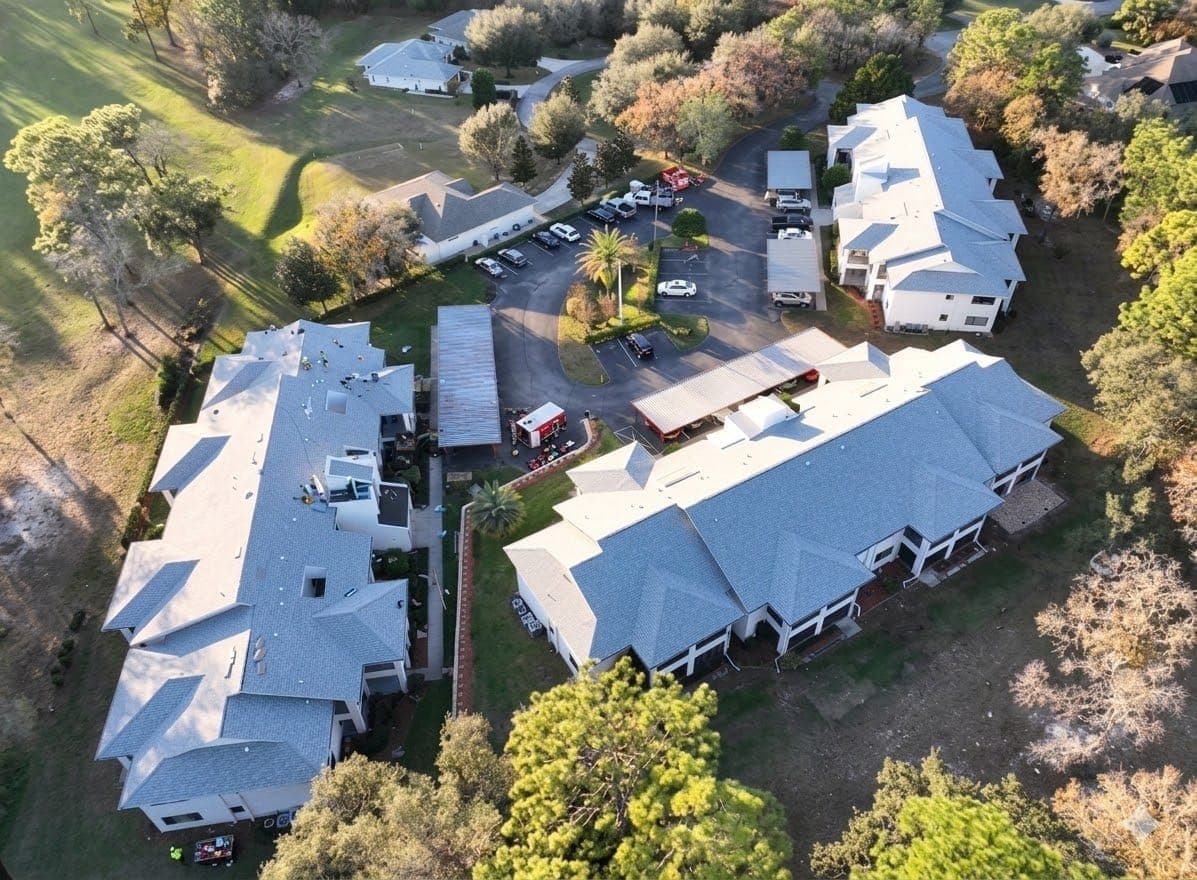
Multi-Family Roofing
Multi-family roofing for apartments and condos in Central Florida. Expert installation, repair, and replacement. Call (352) 605-0696.
Call (352) 605-0696The single biggest difference between roofing a multi-family building and roofing any other type of structure is that people are living and working inside the building while the work is happening above them. This fact drives every decision from scheduling to material selection to crew management.
Unique Challenges of Roofing Occupied Multi-Family Buildings
The single biggest difference between roofing a multi-family building and roofing any other type of structure is that people are living and working inside the building while the work is happening above them. This fact drives every decision from scheduling to material selection to crew management.
Noise is the most immediate and most complained-about impact of roofing work on occupied buildings. The process of tearing off old roofing material, installing new decking or repairs, and fastening new material generates significant noise that resonates through the building structure. In a multi-family setting, that noise affects residents directly below the active work zone, residents in adjacent units connected by shared walls, and in some cases residents several floors below in concrete-framed buildings where sound travels through the structure. Managing noise means limiting work to reasonable hours, typically 7:00 AM to 6:00 PM on weekdays with no weekend work unless the property management specifically authorizes it. It also means staging the work so that any single unit is directly under active noise for the shortest possible duration, rotating through sections rather than lingering over one area for days.
Vibration from equipment like pneumatic nail guns, power tools, and material handling can cause pictures to fall from walls, dishes to rattle in cabinets, and ceiling fixtures to loosen. In older buildings with plaster ceilings, heavy vibration can cause cracking and flaking. We calibrate our equipment and work methods to minimize vibration transmission, and we alert residents in advance about the specific days their section will experience the most activity.
Debris management is far more critical on multi-family buildings than on single-family homes. When shingles, underlayment, nails, and other materials are removed from a roof, they fall. On a single-family home, the drop zone is typically a yard area that can be easily controlled. On a multi-family building, the drop zone may include walkways, parking areas, common areas, playgrounds, and the entrances to individual units. Falling debris poses a genuine safety hazard to residents and visitors. We establish controlled drop zones, use debris chutes to direct removed material into dumpsters, and station ground crew members to monitor pedestrian traffic around the work area. At the end of every work day, we sweep all common areas and use magnetic rollers to collect stray nails and fasteners from parking lots and walkways.
Access logistics on multi-family properties require advance planning that goes beyond anything needed on a residential or commercial job. Materials must be delivered and staged without blocking parking spaces that residents depend on. Dumpsters must be placed where they are accessible to the roofing crew but do not block fire lanes, resident access, or emergency vehicle routes. Equipment like cranes, lifts, and material hoists must be positioned without damaging landscaping, irrigation systems, or underground utilities. We create detailed site logistics plans for every multi-family project that map out material staging areas, equipment positioning, crew parking, debris management zones, and pedestrian routing around the active work areas.
Water management during the project is critical because the building must remain habitable throughout the work. We never open more roof area than we can close and waterproof within the same work day. This means careful planning of daily tear-off quantities to match the crew’s capacity to install new material before weather threatens. In Central Florida, where afternoon thunderstorms can develop rapidly during the summer months, this daily waterproofing discipline is non-negotiable. Every section that is opened gets closed the same day, and we maintain emergency tarping materials on-site at all times as a backup.
Roofing System Selection for Multi-Family Properties
The roofing system that works best for a multi-family building depends on the roof geometry, the building’s structural capacity, the desired lifespan, maintenance requirements, and budget constraints. Multi-family properties tend to favor certain systems over others based on decades of performance data in Central Florida’s climate.
Modified bitumen roofing is one of the most popular choices for flat and low-slope multi-family roofs. Modified bitumen membranes consist of asphalt-based sheets reinforced with polyester or fiberglass mats and modified with polymers, either SBS (styrene-butadiene-styrene) for flexibility or APP (atactic polypropylene) for heat resistance. The material is installed in overlapping sheets that are adhered, torch-applied, or mechanically fastened, creating a multi-layer waterproof membrane. Modified bitumen offers excellent puncture resistance, handles foot traffic well during maintenance, and provides reliable waterproofing performance over a 20 to 25 year lifespan with proper maintenance. Its dark surface can be coated with a reflective coating to improve energy performance, adding cool roof benefits without changing the underlying system.
TPO (thermoplastic polyolefin) single-ply membrane has become the dominant commercial and multi-family roofing material in Central Florida over the past 15 years. TPO membranes are factory-fabricated sheets, typically 45 to 80 mils thick, that are mechanically fastened or fully adhered to the roof deck and heat-welded at the seams. The heat-welded seams are actually stronger than the field membrane, which eliminates the seam failures that plague other single-ply systems. TPO’s white surface provides inherent cool roof properties, reducing cooling costs without the need for an additional reflective coating. The material handles ponding water well, resists UV degradation, and offers a 20 to 30 year expected service life. For multi-family properties where energy efficiency and low maintenance are priorities, TPO is an excellent choice.
PVC (polyvinyl chloride) roofing offers similar performance to TPO with the added benefit of superior chemical resistance. In multi-family settings where rooftop equipment includes grease-producing kitchen exhausts from restaurant tenants or commercial kitchens, PVC’s resistance to oils and animal fats makes it the preferred choice. PVC also has a longer track record than TPO, with installations from the 1960s still in service, providing confidence in the material’s long-term durability.
Built-up roofing (BUR) remains a viable option for multi-family flat roofs, particularly for property owners who prioritize redundancy in their waterproofing system. A BUR roof consists of multiple alternating layers of bitumen and reinforcing fabric, creating a thick, robust membrane that provides multiple levels of waterproofing. The multi-layer construction means that even if one layer is damaged, the layers beneath continue to protect the building. BUR roofs typically last 20 to 30 years and can be maintained and recoated to extend their service life further.
For multi-family buildings with sloped roofs, asphalt architectural shingles and metal roofing are the primary options. Architectural shingles offer the most economical installed cost and a wide range of aesthetic options. Metal roofing, particularly standing seam profiles, delivers superior wind resistance, longer lifespan, and lower lifetime maintenance costs. The choice often comes down to the property’s position in the market, with luxury communities and high-end condominiums favoring metal for its premium appearance and performance, while workforce housing and mid-range apartments typically selecting architectural shingles for budget efficiency.
Phased Construction: Keeping Residents in Their Homes
One of the defining characteristics of multi-family roofing projects is the use of phased construction to maintain building occupancy throughout the project. Unlike a single-family home where the family can leave for the day or stay with relatives, multi-family residents need to continue living in their units during the work. Phased construction makes this possible.
A phased construction plan divides the total roof area into manageable sections, each of which is completed as a self-contained project within the larger scope. The phases are sequenced so that no more than a limited percentage of the building is under active construction at any given time. This limits noise exposure, debris generation, and disruption to a manageable portion of the resident population while the remaining residents experience minimal impact.
The number and size of phases depend on the building’s configuration, the total roof area, the crew size, and the property management’s tolerance for project duration. A small apartment complex might be divided into three or four phases, each covering one building or one wing. A large condominium community with multiple buildings might operate on a building-by-building phasing plan that stretches over several months. The trade-off is always between project duration and daily disruption: more phases mean longer total project time but less disruption at any given moment, while fewer phases mean faster completion but more concentrated impact.
At Protech, we develop the phasing plan in collaboration with the property manager, taking into account factors that go beyond pure construction efficiency. We consider which buildings or sections house residents with special needs, such as elderly residents, families with infants, or residents with medical conditions that make noise and disruption particularly problematic. We plan phases to avoid conflicting with community events, pool season schedules, and holiday periods when resident tolerance for construction activity is lowest. We schedule the most disruptive phases, particularly tear-off operations, during periods when the largest number of residents are typically away at work.
Each phase follows a complete cycle: preparation, tear-off, repair, installation, and cleanup. When one phase is complete, the section is fully functional and protected before the crew moves to the next phase. This means that if weather, material delays, or other factors cause a pause between phases, the building remains fully weatherproof with no temporary conditions exposed.
HOA and Condo Board Coordination
Multi-family roofing projects involve a decision-making process that is fundamentally different from residential or commercial work. Instead of a single property owner making decisions, multi-family projects often require approval from a homeowners association board, a condo board of directors, or a property management company acting on behalf of the ownership entity. This decision-making structure adds layers of communication, approval requirements, and stakeholder management that experienced multi-family contractors navigate as a matter of course.
The process typically begins with an assessment or inspection that identifies the need for roofing work. The contractor prepares a detailed report documenting the current roof condition, recommended scope of work, material options with comparative analysis, cost estimates, and projected timelines. This report becomes the basis for the board’s evaluation and decision.
Board meetings operate on their own schedule, typically monthly, and major expenditures like roofing projects may require multiple meetings for presentation, discussion, and vote. Special assessments to fund the roofing project may require member approval depending on the association’s governing documents and the amount involved. The timeline from initial assessment to project approval can span several months, and experienced contractors understand this pace and remain engaged and responsive throughout the process without pressuring the board to rush their deliberation.
We present our proposals in formats that work for board meetings: clear written reports, visual presentations when requested, and comparison matrices that help board members evaluate options objectively. We attend board meetings in person when invited to present our findings and answer questions from board members and residents. We provide references from other multi-family properties we have served so that board members can speak directly with other community managers who have been through the process with us.
Once the project is approved, ongoing communication with the board and property management is essential. We provide regular progress reports, typically weekly, that document what has been completed, what is scheduled for the coming week, any issues that have arisen and how they were resolved, and updated projections for project completion. This level of communication keeps the board informed and gives the property manager the information they need to respond to resident inquiries about the project.
Financial management on multi-family projects often involves specific payment structures such as progress payments tied to milestone completion, retainage holdbacks until final inspection and punch list completion, and documentation requirements for the association’s records and insurance. We are experienced with these arrangements and handle the administrative requirements as a standard part of our multi-family project management.
Tenant and Resident Communication
Keeping residents informed before and during a roofing project is not just a courtesy. It is a practical necessity that directly affects the project’s success. Informed residents are cooperative residents. Residents who are caught off guard by noise, parking disruptions, or access changes become frustrated and direct their complaints to property management, which creates a hostile environment that makes everyone’s job harder.
Before the project begins, we work with property management to prepare and distribute resident notification packages. These notifications include the project start date and estimated duration, the phasing plan showing which sections will be worked on and when, expected noise levels and working hours, parking area impacts and alternative parking arrangements, any temporary changes to building access or common area availability, and contact information for the property manager and our on-site project manager.
Timing of notification matters. The initial notification should go out at least two to three weeks before work begins, giving residents time to plan around any disruptions. A reminder notification one week before work starts reinforces the timeline. As each phase begins, targeted notifications go to the specific residents who will be most directly affected, detailing the expected duration of work in their immediate area.
During the project, regular updates keep residents informed about progress and any schedule changes. These updates can be posted on community bulletin boards, distributed via the property management’s communication channels, or posted to community apps and websites. The key is consistency: regular, predictable communication that residents can rely on.
Our on-site project managers are trained to interact professionally and respectfully with residents who have questions or concerns. When a resident approaches a crew member with a complaint or question, the interaction is handled with courtesy and the concern is escalated to the project manager if it cannot be resolved immediately. We have found that most resident concerns are resolved simply by acknowledging the inconvenience and providing clear information about when the disruption will end in their specific area.
For properties with elderly residents, residents with disabilities, or residents with medical conditions that may be affected by noise and vibration, advance coordination with the property manager to identify these individuals and plan accordingly is part of our standard process. In some cases, this may mean adjusting the work sequence, providing additional advance notice, or scheduling the most disruptive activities for times when the affected resident is typically away from the unit.
Long-Term Maintenance Plans for Multi-Family Roofs
A well-maintained multi-family roof lasts significantly longer than a neglected one, and the cost of maintenance is a fraction of the cost of premature replacement. Establishing a long-term maintenance plan at the time of installation or immediately after a major roofing project sets the property up for maximum return on its roofing investment.
Semi-annual inspections are the foundation of any effective maintenance plan. We recommend inspections twice per year: once in the spring before the summer storm season begins and once in the fall after the storm season concludes. These inspections cover every component of the roofing system including the membrane or surface material, flashing at all penetrations and edges, sealants and caulking, drainage systems including gutters, downspouts, and internal drains, mechanical equipment supports and curbs, and access hatches and safety equipment.
Each inspection produces a written report with photographs documenting the current condition of every component, identifying any areas of concern, recommending any necessary repairs, and providing a professional assessment of the roof’s overall condition. These reports serve multiple purposes. They guide maintenance decisions, create a documented history of the roof’s condition over time, support reserve study calculations for future capital planning, and provide evidence of proper maintenance that supports warranty claims if issues arise.
Routine maintenance tasks that should be performed between inspections include clearing debris from the roof surface and drainage pathways, cleaning gutters and downspouts, removing vegetation growth from the roof surface and parapet walls, inspecting and recaulking exposed sealants around penetrations, and verifying that all drainage paths are clear and functional.
Preventive repairs address minor issues before they become major problems. Seam repairs on single-ply membranes, flashing resealing, minor membrane patches, and gutter realignment are examples of preventive repairs that cost hundreds of dollars but prevent failures that would cost thousands. The key is catching these issues during routine inspections rather than discovering them when a leak damages a resident’s unit and triggers an emergency repair call.
Reserve planning is a critical component of long-term roof management for multi-family properties. Florida law requires condominium associations to maintain reserves for major capital expenditures, and roofing is typically one of the largest line items in a reserve study. An accurate assessment of the roof’s current condition and remaining service life is essential for calculating appropriate reserve contributions. Underfunding reserves leads to special assessments that burden unit owners, while overfunding ties up money unnecessarily. Our inspection reports provide the condition data that reserve study professionals need to make accurate projections.
The expected lifespan of multi-family roofing systems in Central Florida ranges from 20 to 30 years depending on the material, installation quality, and maintenance history. Modified bitumen and TPO systems typically deliver 20 to 25 years of reliable service when properly maintained. PVC and high-quality BUR systems can reach 25 to 30 years. Metal roofing on sloped multi-family applications can last 40 years or more. These lifespans assume proper installation, regular maintenance, and timely repair of damage from storms and other events.
Insurance, Code Compliance, and Permitting for Multi-Family Roofs
Multi-family roofing projects operate within a regulatory and insurance framework that differs from single-family residential work in several important ways. Understanding these differences helps property managers and board members plan effectively and avoid costly surprises.
Permitting for multi-family roofing follows the same Florida Building Code requirements as any other roofing project, but the scale of the work and the occupancy classification of the building can trigger additional requirements. Multi-family buildings classified as commercial occupancies, which includes most apartment complexes and condominiums above a certain size, may require engineering documentation, structural calculations, and more extensive plan review as part of the permitting process. The permitting timeline for these projects can be longer than for residential work, and this lead time needs to be factored into the overall project schedule.
The Florida Building Code’s 25% rule applies to multi-family buildings just as it does to single-family homes. When storm damage or deterioration affects 25% or more of the roof area, the entire roof must be brought up to current code standards. For a large multi-family property with an older roof, this can transform what was expected to be a partial repair into a complete reroof with upgraded attachment methods, sealed roof deck, and current wind resistance standards. While the scope and cost increase significantly, the result is a building that meets the latest safety standards and may qualify for reduced insurance premiums.
Insurance considerations for multi-family roofing projects involve both the property’s own coverage and the contractor’s coverage. Property insurance policies for multi-family buildings typically cover storm damage restoration, and the claims process follows similar procedures to residential claims but with higher dollar amounts and more detailed documentation requirements. The property’s insurance carrier may require specific documentation from the roofing contractor, including detailed scope of work, material specifications, warranty information, and proof of code compliance through passed inspections.
Contractor insurance requirements for multi-family work are more demanding than for residential projects. Property management companies and associations typically require general liability coverage of $1 million to $2 million per occurrence, commercial auto coverage, workers compensation for all employees, and umbrella coverage that provides additional protection above the primary policy limits. The property is usually named as an additional insured on the contractor’s policy for the duration of the project. At Protech, we carry all required coverages and handle the certificate of insurance process as a routine part of our project administration.
Wind mitigation inspections after a multi-family reroof can yield significant insurance premium reductions. When a roof is replaced to current Florida Building Code standards, the building qualifies for wind mitigation credits that reflect the improved storm resistance of the new system. For multi-family properties where insurance premiums represent a major operating expense, these credits can reduce annual costs by thousands of dollars, providing ongoing financial benefit that partially offsets the capital investment in the new roof.
Choosing Protech for Your Multi-Family Roofing Project
Multi-family roofing is not just a bigger version of residential roofing. It is a fundamentally different type of project that requires different skills, different management approaches, and a different understanding of what success looks like. Success on a multi-family project is measured not just by the quality of the finished roof but by how well the project was managed, how the residents were treated, and how effectively the contractor communicated with all stakeholders throughout the process.
At Protech Roofing Services, we bring a multi-family mindset to every aspect of our work on these properties. Our project managers have specific experience managing phased construction on occupied buildings. Our crews are trained in the safety, noise management, and debris control protocols that multi-family work demands. Our administrative team handles the documentation, communication, and financial management requirements that property managers and HOA boards expect.
We maintain the specialized insurance coverage required for multi-family work, including the liability limits and additional insured endorsements that property management companies and associations typically require. We carry workers compensation coverage for our entire crew and can provide certificates of insurance in any format required.
Our multi-family client roster includes apartment communities, condominium associations, townhome developments, assisted living facilities, and mixed-use properties across Hernando, Citrus, Pasco, Sumter, Polk, Hillsborough, and Pinellas counties. Each of these properties is a reference that we are proud to provide because we know the property managers and board members we worked with will speak honestly about their experience with our team.
Whether your property needs a full roof replacement, a phased restoration program, an emergency repair after a storm, or a long-term maintenance plan to maximize the life of your existing system, Protech Roofing Services has the capability and the commitment to deliver results that protect your property and satisfy your residents.
Schedule Your Multi-Family Roof Assessment
Every multi-family roofing project starts with a thorough assessment of the current system. Whether you are a property manager planning ahead, a board member preparing for a capital improvement vote, or a building owner evaluating your options, we invite you to start with a professional assessment from Protech.
Our multi-family roof assessments include a complete inspection of the entire roof system, documentation of current conditions with detailed photographs, identification of any areas requiring immediate attention, a professional estimate of remaining service life, material and system recommendations for replacement or restoration, and a preliminary cost estimate for the recommended scope of work.
This assessment is provided at no cost and with no obligation. We believe that informed property owners and managers make better decisions, and our job at this stage is simply to give you the information you need to make those decisions with confidence.
Call Protech Roofing Services at (352) 605-0696 to schedule your multi-family roof assessment. We serve properties throughout Hernando, Citrus, Pasco, Sumter, Polk, Hillsborough, and Pinellas counties, and we are ready to put our multi-family roofing experience to work for your community.
FAQ
Frequently Asked Questions
Where do I find an apartment or condo roofing contractor near me?
+
What roofing systems work best for multi-family properties?
+
How do you handle roofing projects on occupied multi-family buildings?
+
What is the typical lifespan of a multi-family roof?
+
How often should multi-family roofs be inspected?
+
Can you re-roof a multi-family building without displacing tenants?
+
What should property managers look for between professional inspections?
+
Roofing Knowledge
Articles and guides for homeowners
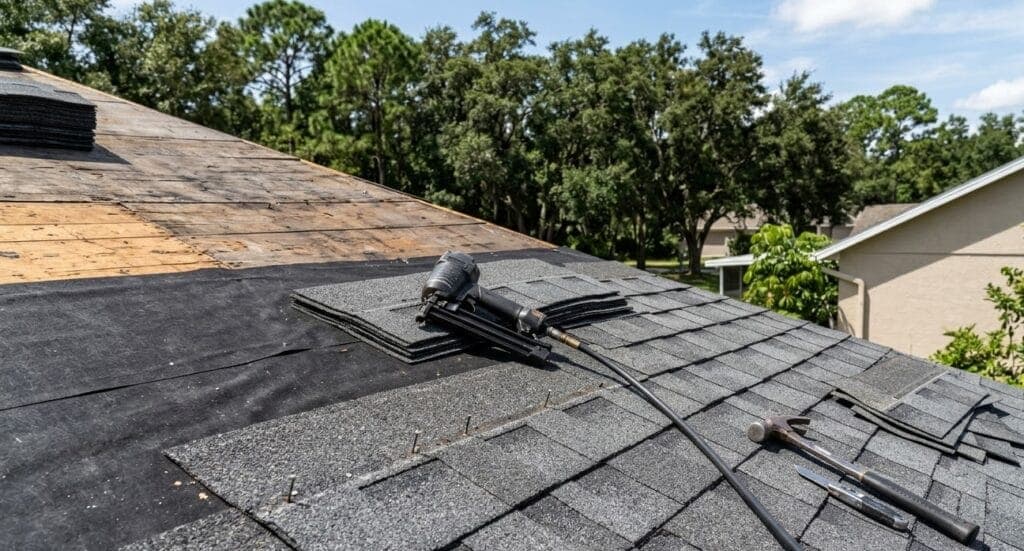
Roofing Warranties in Florida: What Voids Them
A new Florida roof usually carries two warranties: one from the manufacturer for the product and one from the contractor for the installation. Here is what each covers, what quietly voids them and how to keep your coverage.
Read ArticleSolar Roofing in Florida: Solar Shingles vs Panels (2026)
Every solar system on a Florida roof is either bolted to the roof or is the roof. Here is how panels and solar shingles compare in 2026, what changed with the federal credit, and why the cheapest solar project often starts with a re-roof.
Read Article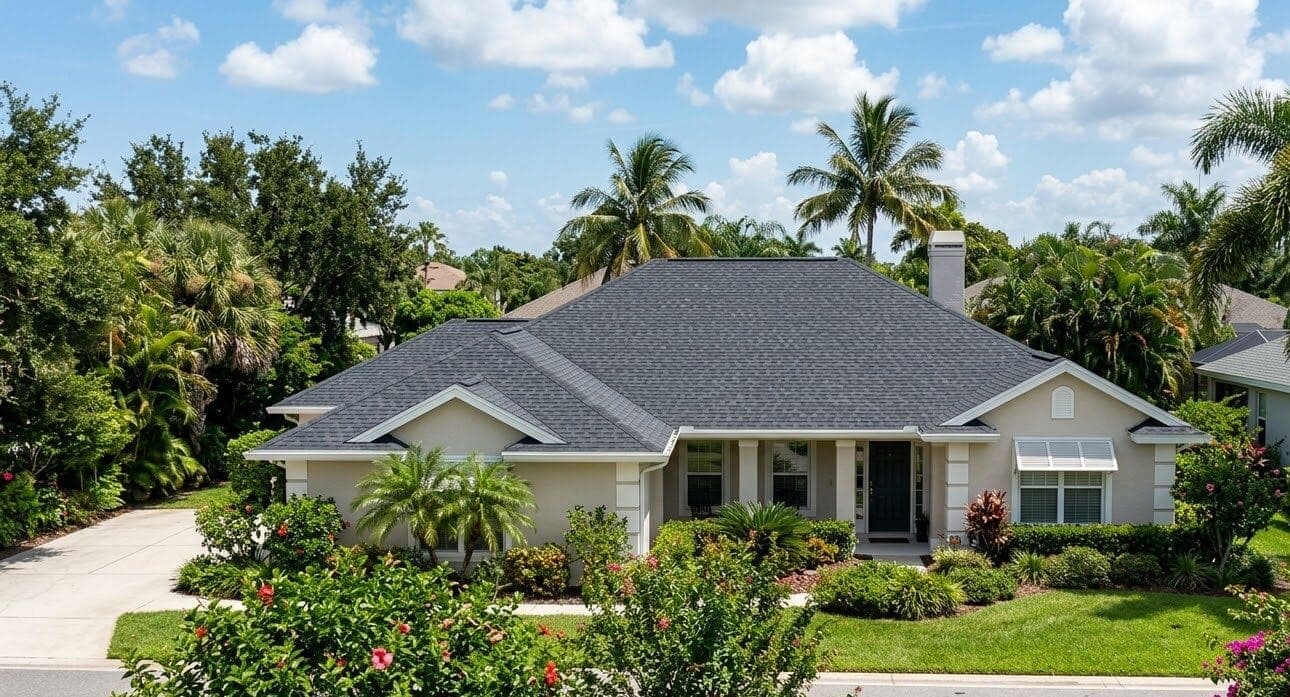
Pinellas Flood Zone Roofing: The 49% Rule Explained
Every article calls it the FEMA 50 percent rule. In unincorporated Pinellas County the number that governs your permit is 49 percent, measured against structure value without land. Here is what counts toward it, where a roof replacement actually lands in that math, and why simultaneous permits still aggregate even where the lookback period was repealed.
Read ArticleReady When You Are
Get your free roof inspection today.
No-pressure, written estimate. Same-week scheduling across Hernando County. Call us now or request a visit online.