Call (352) 605-0696

Weeki Wachee, FL

Roof Repair Weeki Wachee FL

Roof repair in Weeki Wachee, FL. Hernando County roofing with 120 mph wind rated materials. Call (352) 605-0696.

Call (352) 605-0696

Weeki Wachee is a city in Hernando County famous for its natural springs and the iconic mermaid shows that have drawn visitors since the 1940s. Beyond the tourist attraction, the city includes residential neighborhoods where homeowners face typical Gulf Coast roofing challenges like wind-driven rain, high humidity, and tropical storm exposure. Protech Roofing offers professional roof repair in Weeki Wachee, keeping homes protected with fast, reliable service from a team that knows the area well.

You Are Viewing

Roof Repair for homeowners and businesses in Weeki Wachee, part of Hernando County, FL, Florida.

Roof Repair for Weeki Wachee’s Unique Residential Properties

Roof repair in Weeki Wachee, FL addresses the specific wear patterns that develop on homes in this western Hernando County community. Weeki Wachee sits along the US 19 corridor and is best known worldwide for the iconic mermaid shows at Weeki Wachee Springs State Park, where performers have been swimming in the crystal-clear spring water since Newton Perry opened the attraction in October 1947. But beyond the tourism, Weeki Wachee is a residential community with homes that face real weather challenges year after year.

The area around Weeki Wachee includes a mix of older ranch-style homes built during the 1970s and 1980s development boom, manufactured homes on larger lots, and newer construction that followed Spring Hill’s expansion westward. Each type of structure presents different roof repair needs. Older stick-built homes often have original roof trusses designed to earlier code standards, while manufactured homes require specialized repair techniques that account for their lighter framing systems. And newer homes built after the 2002 Florida Building Code overhaul generally have stronger connections but still take damage from the storms that roll through Hernando County.

Protech Roofing has worked on roofs throughout the Weeki Wachee area and the surrounding communities of Spring Hill, North Weeki Wachee, and Weeki Wachee Gardens. We understand the local building requirements, the common failure points on homes in this region, and the permit process through the Hernando County Building Division.

Back-to-Back Hurricanes and What They Did to Weeki Wachee Roofs

Hurricane Idalia hit on August 30, 2023 as a Category 3 storm and brought serious flooding to western Hernando County. State troopers blocked roads into Weeki Wachee as water levels reached the bridge at Rogers Park on the Weeki Wachee River. The Weeki Wachee Marina went underwater. Withlacoochee River Electric Cooperative cut power to the entire Weeki Wachee area until the surge receded. One resident reported six inches inside their home and 16 inches in the garage, while a neighbor took 27 inches of water.

Then Hurricane Helene arrived on September 26, 2024. Helene moved up the coastline roughly 90 miles offshore, packing winds over 120 mph near its center and spreading hurricane-force conditions along the coast. Some neighbors along the Weeki Wachee River saw nearly 6 feet of water inside their homes. The Palm Grove Colony community, which had just finished rebuilding from Idalia, had to start over again. The Kayak Shack on the river lost its docks entirely and had water several feet up its interior walls.

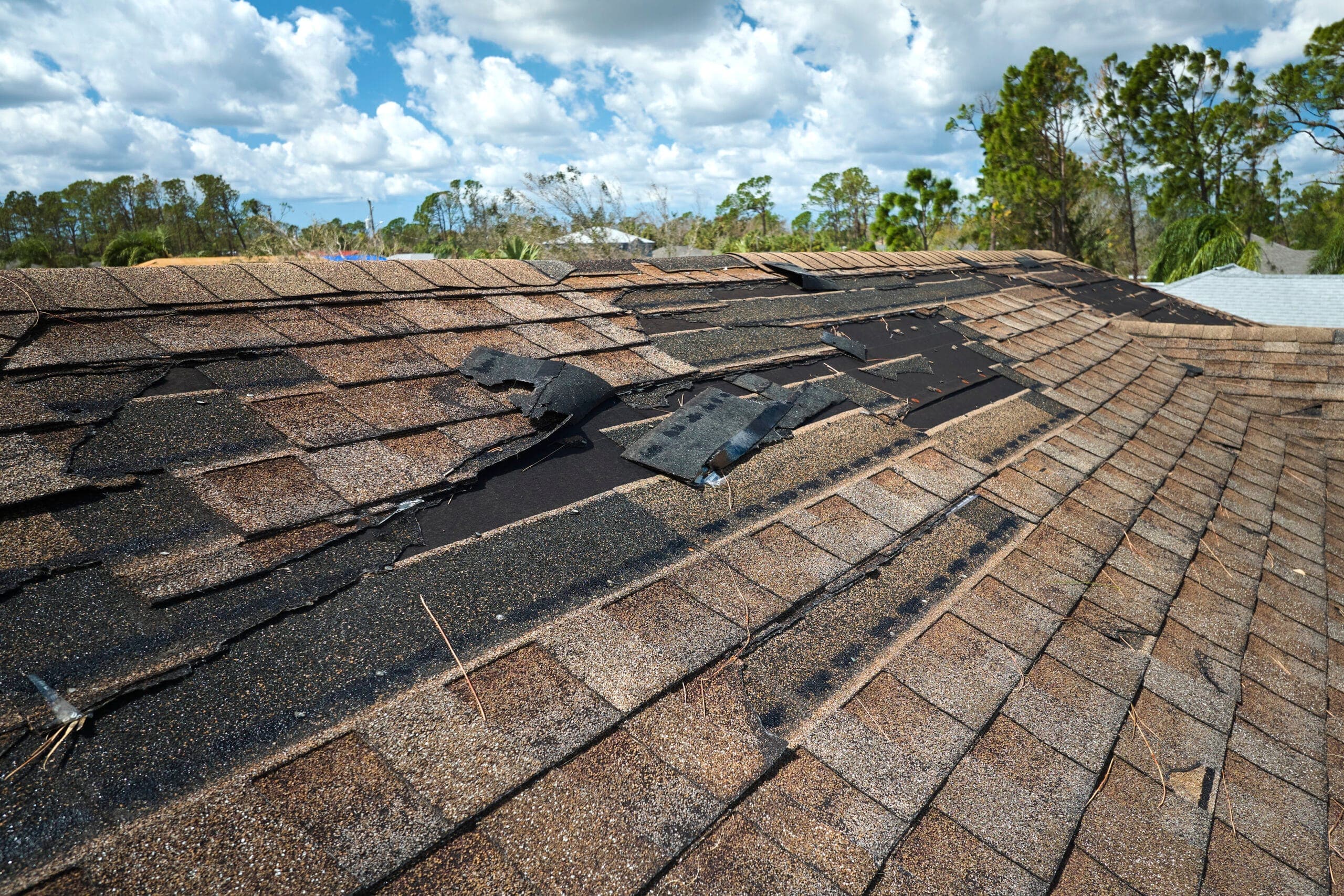
Two major storms in 13 months left hundreds of Weeki Wachee roofs with damage that ranges from obvious to hidden. Wind lifts shingle tabs and breaks the sealant strips that hold courses together. Water pushing against exterior walls shifts foundations and framing, which transfers stress into roof connections. Trusses twist, ridge boards separate, and rafters pull at their bearing points. These structural movements create gaps in the roof covering that may not leak until weeks or months after the storm passes.

So if your Weeki Wachee home went through both Idalia and Helene, a professional roof inspection is worth the investment even if you don’t see obvious damage from the ground. Hidden fastener failures and underlayment tears are common after repeated high-wind events, and catching them early prevents interior water damage that costs far more to fix than the roof repair itself.

Common Roof Problems on Weeki Wachee Homes

The most frequent repair calls we get from Weeki Wachee involve rubber pipe boot failures. Every plumbing vent that exits through the roof has a rubber collar around the pipe, and Florida’s UV exposure breaks down that rubber over 8 to 12 years. The rubber cracks, pulls away from the pipe, and water runs straight down the vent pipe into your ceiling. Replacing a failed pipe boot with a thermoplastic or metal collar costs $175 to $350 and prevents the kind of slow ceiling leak that grows mold before you even notice the stain.

Wind-lifted shingles are the second most common issue. Weeki Wachee sits in the 120 mph basic wind speed zone under the Florida Building Code. That’s the standard inland Hernando County rating, and it requires six nails per shingle on standard three-tab products and four nails per architectural shingle in the correct nailing pattern. But many older Weeki Wachee homes were roofed with four-nail patterns on three-tab shingles, which met the code at the time but doesn’t hold up to modern storm intensity. When we repair wind-damaged sections on these older roofs, we bring the repaired area up to current six-nail standards.

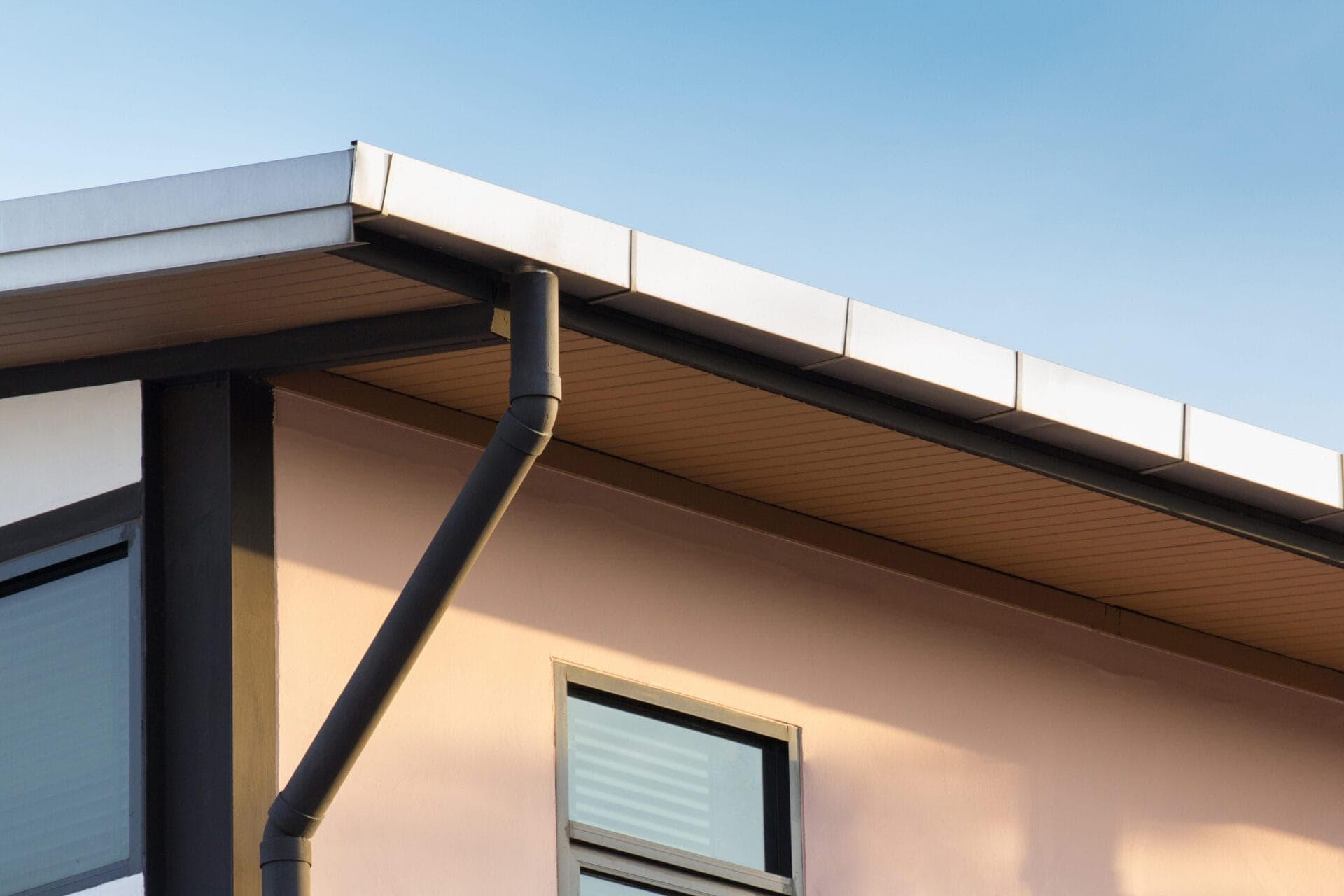
Drip edge failures along eaves and rakes let wind-driven rain behind the fascia board and into the soffit cavity. Once water enters the soffit area, it can travel along the top plates of exterior walls and stain ceilings several feet from the actual entry point. This makes drip edge leaks tricky to diagnose because the ceiling stain isn’t directly below the roof problem. We trace leak paths from the interior stain back through the attic to find the actual entry point, which on Weeki Wachee homes is frequently at the drip edge or the transition between the roof plane and the gutter line.

Flashing failures around masonry chimneys and wall-to-roof intersections make up a good portion of our Weeki Wachee repair work as well. Step flashing that was installed with galvanized steel in the 1980s or 1990s develops pinholes from oxidation, especially on the south-facing roof planes that get the most direct sun exposure. Replacing deteriorated step flashing with aluminum and properly integrating it with new kickout flashings at the bottom of each wall-to-roof intersection prevents water from running behind the siding and into the wall cavity.

Low Elevation, Gulf Proximity, and Salt-Air Fastener Corrosion

Weeki Wachee sits at 10 feet above sea level, and that matters for roof repair in ways most homeowners never think about until a failure happens. At 10 feet, the roof of a one-story home is at roughly 20 to 25 feet overall, well within the marine atmosphere that extends inland from the Gulf of Mexico about 5 miles west at Bayport and Hernando Beach. Salt-laden air rides inland on afternoon sea breezes almost every day from April through October. That salt deposits on roof surfaces, washes into fastener heads during rain, and starts a corrosion process that standard inland roofs never experience.

Galvanized roofing nails and staples have a finite coating thickness. In dry inland neighborhoods like parts of eastern Brooksville 20 miles east, that coating can last the full service life of a shingle system. In Weeki Wachee we regularly pull 10-year-old galvanized nails that already show white zinc-oxide blooming around the head and rust forming on the shank under the shingle. When the head rusts through, the nail loses its grip, and the next strong wind lifts the tab. On repair calls for older roofs in the 34607 and 34613 ZIP codes, the first thing we check after a blow-off is whether the remaining fasteners on the same slope show corrosion signs that predict another failure in the same spot within a season or two.

The fix is specifying stainless steel fasteners, or at minimum hot-dipped galvanized with a G-185 coating, when we redo any section exposed to salt air. For step flashing, valley metal, and drip edge replacement on Weeki Wachee homes close to the river or the marshland to the west, we default to 304 stainless unless the owner has a budget constraint. The material premium is modest, 15 to 30 percent on the fastener line item, and it pays back in fewer callbacks on the same slope five years later.

From Florida's Smallest City to Unincorporated Hernando County

For 54 years, Weeki Wachee was the smallest incorporated city in Florida, and often described as the smallest in the United States. The City of Weeki Wachee was chartered in 1966 around the Weeki Wachee Springs attraction, and at the time of dissolution in June 2020 its population was 16 residents. For most of that time, permits and building authority for roofs within the city limits technically ran through the city clerk, though in practice Hernando County handled the inspection work. Homeowners in the surrounding neighborhoods used the county directly. The 2020 dissolution folded everything into the Hernando County Building Division.

That matters for roof repair today because older permit records for homes that used to sit inside the former city boundary may be scattered between the county and the now-dissolved city files. If you purchased a home in the central Weeki Wachee area and the title history shows prior improvements between 1967 and 2019, it is worth pulling the permit history through the county records portal before scheduling any significant work. Missing permit documentation from the former city can complicate insurance claims if a carrier requests proof that prior roof work met code. We have run into this on several repair jobs where an older reroof from the 1990s had no matching permit in county records because the original paperwork was filed with the former city.

For current repairs, the process is straightforward. Hernando County Building Division handles every permit, inspection, and code review for the entire former city area plus the surrounding unincorporated communities of North Weeki Wachee, Weeki Wachee Gardens, and the residential neighborhoods along US 19. There is no longer any split jurisdiction to untangle before starting work.

Permits and Code Requirements for Weeki Wachee Roof Repairs

Weeki Wachee is unincorporated Hernando County, so all building permits go through the Hernando County Building Division at 789 Providence Boulevard in Brooksville. You can reach them at (352) 754-4050 for questions about whether your specific repair requires a permit. The 2023 Florida Building Code governs all current permit applications in Hernando County.

Not every roof repair needs a permit. Replacing a handful of damaged shingles, resealing flashings, or swapping out deteriorated pipe boots falls under routine maintenance. But once a repair involves replacing roof decking, modifying any structural component, or covering more than 25 percent of the total roof area, a permit is required. And any repair that changes the roof covering material, like going from three-tab to architectural shingles on the repaired section, also triggers permit requirements.

The Florida Building Code includes a helpful provision for partial repairs. If your Weeki Wachee home was built to the 2007 code or newer and the repair covers less than 25 percent of the roof, only the repaired section needs to meet current code standards. You don’t have to bring the entire roof up to the latest requirements. This reduces the cost of partial repairs significantly, especially on homes that are only 10 to 15 years old and already built to a strong baseline code.

All roofing materials used in Weeki Wachee must carry Florida Product Approval for the 120 mph wind speed zone. This applies to shingles, underlayment, ridge vents, drip edge, and all fastener products. Non-approved materials will fail inspection and must be removed and replaced at the contractor’s expense. Protech Roofing stocks only Florida-approved materials and can provide product approval documentation for every component we install.

What Roof Repairs Actually Cost in Weeki Wachee

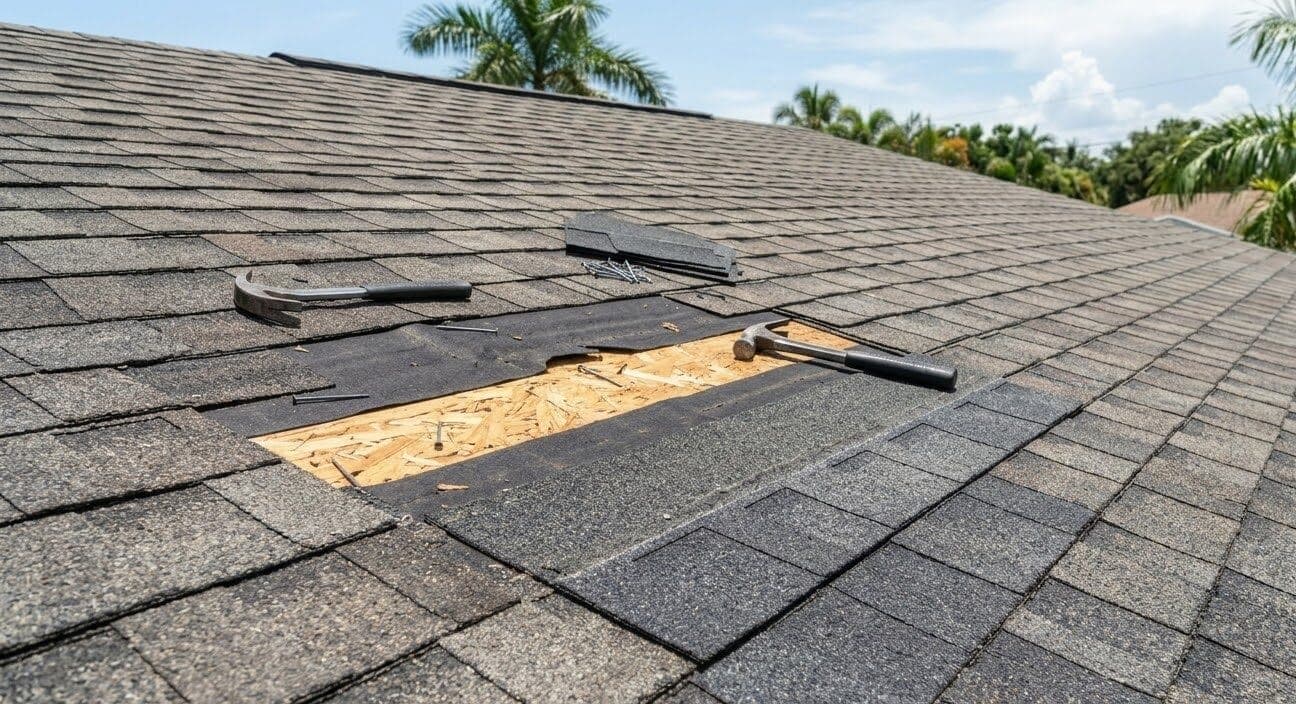
Repair pricing in Weeki Wachee falls in line with standard inland Hernando County rates. Shingle repairs for wind damage or general deterioration range from $250 to $850 depending on the number of affected shingles and whether any decking underneath needs replacement. Pipe boot replacements run $175 to $350 per penetration. Valley flashing replacement typically costs $350 to $900 depending on the valley length and whether the surrounding shingles need to be pulled back and reinstalled.

Ridge cap repairs or replacement cost $300 to $750 depending on the linear footage and whether the ridge vent underneath needs updating. Soffit repair where wind or water has damaged panels runs $200 to $600 per section. And emergency tarping after storm damage, which we did a lot of after both Idalia and Helene in Weeki Wachee, runs $300 to $700 depending on the area that needs coverage.

Roof decking replacement during a repair adds $150 to $300 per 4×8 sheet of plywood or OSB, plus labor for removal of the damaged panel and installation of the replacement. The fastening pattern for roof decking in the 120 mph zone requires 8d ring-shank nails at 6 inches on center along panel edges and 12 inches in the field. This is the standard inland Hernando County nailing schedule, and it’s critical for passing the building inspector’s review if your repair requires a permit.

Insurance Claims After Storm Damage in Weeki Wachee

Filing a roof damage claim in Weeki Wachee follows Florida’s standard process, but the back-to-back hurricanes have created some unusual situations for homeowners here. If your home was damaged by Idalia in 2023 and then hit again by Helene in 2024, you may have overlapping claims with the same carrier or different carriers if you switched between storms. Each event is a separate claim with its own deductible, and the insurer for each storm is only responsible for the damage their specific event caused.

Document everything with photos and video immediately after each storm. File your claim within 72 hours of discovering the damage. And get a professional damage assessment from a licensed roofing contractor before the insurance adjuster arrives. Having an independent evaluation of the repair scope gives you a solid baseline to compare against the adjuster’s findings. We’ve seen adjusters in the Weeki Wachee area consistently underestimate repair scopes after both Idalia and Helene, particularly on hidden damage that isn’t visible from the ground.

Wind mitigation inspections are worth scheduling after any repair that improves your roof’s storm resistance. The features that earn premium discounts, like hurricane clips or straps at every truss connection, sealed roof deck, and impact-resistant covering, can save $400 to $800 per year on your policy. A reinspection costs $100 to $125 and documents the improvements for your carrier. After the premium increases that many Weeki Wachee homeowners saw following the 2023 and 2024 hurricane seasons, every available discount makes a real difference.

Seasonal Roof Maintenance for Weeki Wachee Homeowners

Weeki Wachee’s location in western Hernando County puts it in the path of Gulf moisture systems from June through November. The afternoon thunderstorms that build over the Gulf and push inland during summer months bring wind gusts that regularly exceed 60 mph. These aren’t headline-making storms, but they cause cumulative damage to roofing systems over time. Each gust works on the same shingle tabs, the same flashing seams, and the same ridge cap adhesive. Eventually something gives.

A spring roof inspection before hurricane season catches the weak points that winter weather loosened. And a fall inspection after hurricane season documents any storm damage before the next policy renewal. This twice-yearly schedule keeps small problems from becoming expensive repairs. We check every component from the drip edge up to the ridge, including the condition of attic ventilation, soffit screens, and any penetrations through the roof plane.

Tree maintenance matters in Weeki Wachee too. The area has mature oak, pine, and palm trees that drop branches, leaves, and debris onto roofs year-round. Accumulated leaf debris in valleys and behind dormers holds moisture against the roof surface and accelerates shingle granule loss. Keeping branches trimmed to at least 3 feet from the roof surface and cleaning debris from valleys twice a year adds years to the life of any roof in the Weeki Wachee area. And removing overhanging limbs eliminates the single biggest source of impact damage during thunderstorms and tropical events.

FAQ

Frequently Asked Questions

How much does roof repair cost in Weeki Wachee, FL?

+
Roof repair costs in Weeki Wachee follow standard inland Hernando County pricing. Shingle repairs range from $250 to $850, pipe boot replacements cost $175 to $350 per penetration, valley flashing repairs run $350 to $900, and ridge cap work costs $300 to $750. Emergency tarping after storms runs $300 to $700. Decking replacement adds $150 to $300 per sheet if damaged panels need swapping out.

Do I need a permit for roof repair in Weeki Wachee?

+
Weeki Wachee is unincorporated Hernando County, and permits go through the Hernando County Building Division at 789 Providence Boulevard in Brooksville. Minor maintenance like replacing a few shingles or resealing flashings does not require a permit. Repairs that involve decking replacement, structural changes, or covering more than 25 percent of the roof area do require permits. Call (352) 754-4050 for specific questions.

Did Hurricane Idalia and Helene damage roofs in Weeki Wachee?

+
Both storms caused significant damage to Weeki Wachee roofs. Hurricane Idalia in August 2023 brought flooding that reached the Weeki Wachee River bridge at Rogers Park. Hurricane Helene in September 2024 pushed nearly 6 feet of water into some homes along the Weeki Wachee River. The Palm Grove Colony community had to rebuild twice in 13 months. Wind damage from both storms loosened shingles, broke sealant strips, and shifted structural connections on hundreds of homes.

What wind speed rating applies to roofing in Weeki Wachee?

+
Weeki Wachee falls within the 120 mph basic wind speed zone under the Florida Building Code. All roofing materials, fasteners, and installation methods must carry Florida Product Approval for this wind speed rating. This is the standard inland Hernando County rating. Materials without proper Florida Product Approval will fail inspection and must be removed and replaced.

How often should I have my Weeki Wachee roof inspected?

+
We recommend twice-yearly inspections for Weeki Wachee homes. Schedule one in spring before hurricane season starts in June, and another in fall after hurricane season ends in November. This catches weak points before they become active leaks. After the back-to-back hurricanes of 2023 and 2024, regular inspections are especially important for catching hidden damage from structural movement and fastener failures.

Ready When You Are

Get your free roof inspection today.

No-pressure, written estimate. Same-week scheduling across Hernando County. Call us now or request a visit online.